


As I saw the above image, I thought about a story that Simon Sinek narrated in one of the chapters of his 2014 book - Leaders Eat Last (been listening to it on Audible since few days).

Let me share that story. It’s about what happened in the US. Though I think a lot of it is very relevant and true for India too.
How evening-news started in the US
Public radio broadcasting started in the US around 1910-20. The electromagnetic spectrum was initially unregulated but government had to soon jump in - eventually creating a body called the FCC (Federal Communications Commission) under Roosevelt’s administration. By this time, TV broadcast had also started and regulation of TV spectrum fell under FCC too.
FCC mandated that these for-profit radio / TV networks (that focused on entertainment) must also provide public service programming for the community.
This kick-started the concept of evening news: programming meant to serve the public interest apart from the commercial interest of the rest of network programming.
Though the networks didn’t make a lot of money from the news, they did gain something just as important to their businesses, something that money couldn’t buy: a reputation for integrity. Walter Cronkite for example - who served as anchorman of the CBS Evening News from 1962 to 1981 - was considered “the most trusted man in America”.
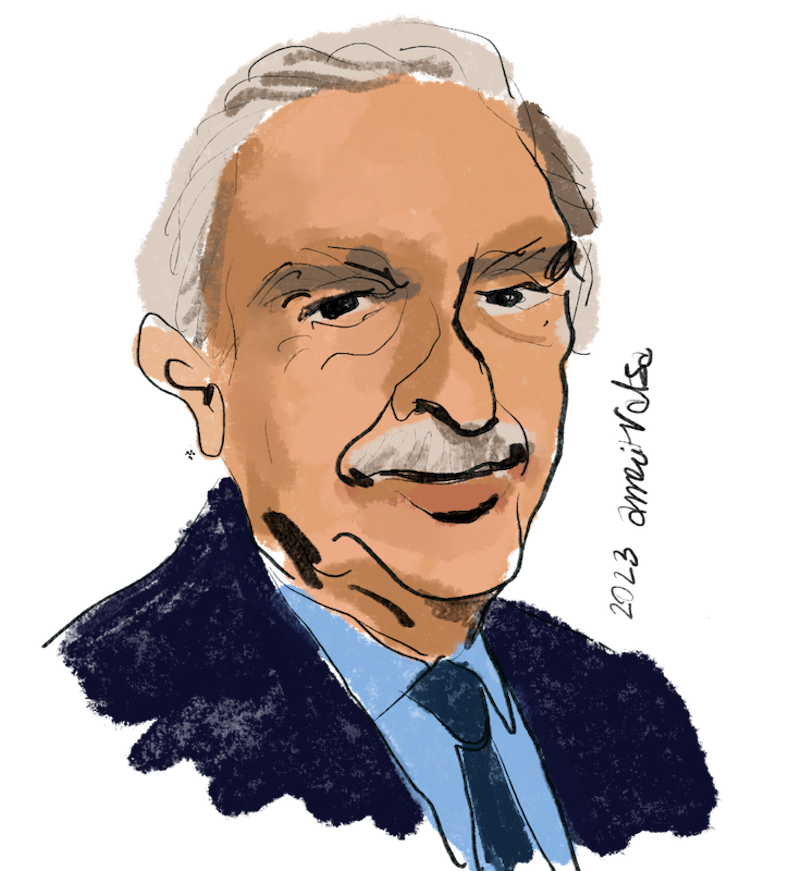
Daily news however never made much money for the networks - and nobody even tried to milk it that way. Programs like 60 Minutes, which had already been on the air for more than a decade, were profitable, but they didn’t air every night. And then came 1979.
Evolution of news as a profit-centre
On 4 November 1979, a group of Islamist students and militants stormed the American embassy in Tehran. They took captive fifty-two Americans. ABC News decided to debut a series called “America Held Hostage: The Iran Crisis”, to cover developments in the hostage crisis. Later renamed Nightline, the show Ted Koppel anchored for twenty-five years gave Americans an update on the crisis every night of the 444-day ordeal.
The program was instantly popular and, for the first time in news history, the network executives took notice. Instead of leaving the news alone to be run by cause-driven, idealistic journalists, they began to see the news as a profit center, and so they started to get more involved.
Then came Fowler
With the end of the Iran hostage crisis came the Reagan administration, and with it a new broadcast sheriff moved into town, newly appointed FCC chairman Mark Fowler.
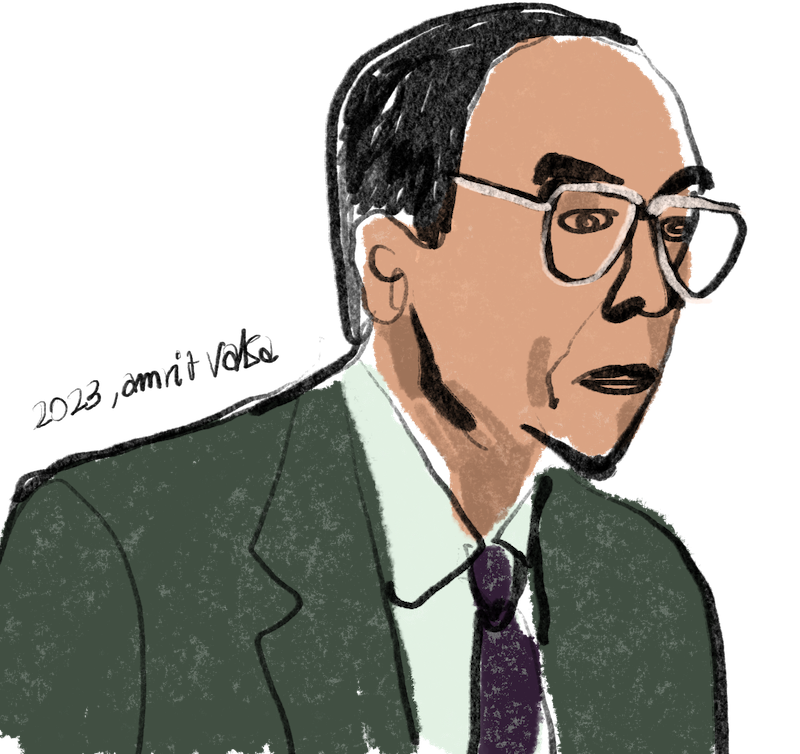
Fowler, and many of his supporters, saw broadcast television—including television news—as just another business trying to make a buck. The advent of cable television and the introduction of CNN also pushed this transformation of news as a service to news being a business.
Fowler and the FCC slowly dismantled most standards to which networks needed to adhere to qualify for a broadcast license
the time that networks had to renew their licenses was extended from three to five years, meaning the old fear of losing a license became less of a concern.
The number of stations a single company could own went from seven to twelve, giving each holding company a greater opportunity to try to seize more market share.
Any provisions for how much advertising could be carried were also eliminated.
Fowler’s FCC even went so far as to abolish the guidelines that set the minimum amount of non-entertainment programming a network was required to air as a condition of its ability to profit from the public’s airwaves. And perhaps the greatest casualty in the network and TV news business came in 1987 with the…
Elimination of the Fairness Doctrine
The Fairness Doctrine was introduced in 1949 to prevent a broadcaster from using a network to advocate any one perspective. In effect, when a broadcaster got a license from FCC, they had to agree not only to discuss controversial topics that would be in the interest of the public, but also to ensure that any views expressed would be balanced by opposing voices.
A Committee for the Fair Broadcasting of Controversial Issues in 1973 had called this doctrine indispensable and the “single most important requirement of operation in the public interest”. But Fowler got rid of it. Today, all the modern networks have the right to take a partisan perspective and be as polarizing as they like—whatever is good for business.
So this was the journey of news as a service to news as just another media platform on which to sell advertising. News business seems to have forgotten the people it is supposed to serve.
If we consider the current state of television news, we get a perfect view of what happens when the drive to be first or to boost ratings is put ahead of the drive to serve the public interest. Among the worst symptoms is the…
media’s willingness to woefully under-report important stories while it overindulges the kinds of stories that might entertain but hardly inform.
What has happened is not because of journalists. In fact, a good many of them are still driven by the “quasi-religious” commitment to reporting the truth. The problem lies with the media executives who see the dissemination of information as part of their business portfolios and not as something driven by mission.
-Simon Senek (Leaders Eat Last)