Here’s the research.
Let me use the Stimulus-Organism-Response (S-O-R) model to explain the problem - as brought out in the linked research.
Stimulus (S): An external trigger. In this case, the stimuli would be some specific features of health / fitness app / wearable device (like say some notification)
Organism (O): Our internal state, or in other words our psychological and cognitive reactions to the stimulus. Basically, what happens inside our minds when we encounter a stimulus / trigger / notification.
Response (R): Our resulting behaviour - the action we take because of our internal reaction to the stimulus.
Alright, so let’s first look at how these apps / devices stimulate us.
Stimulus
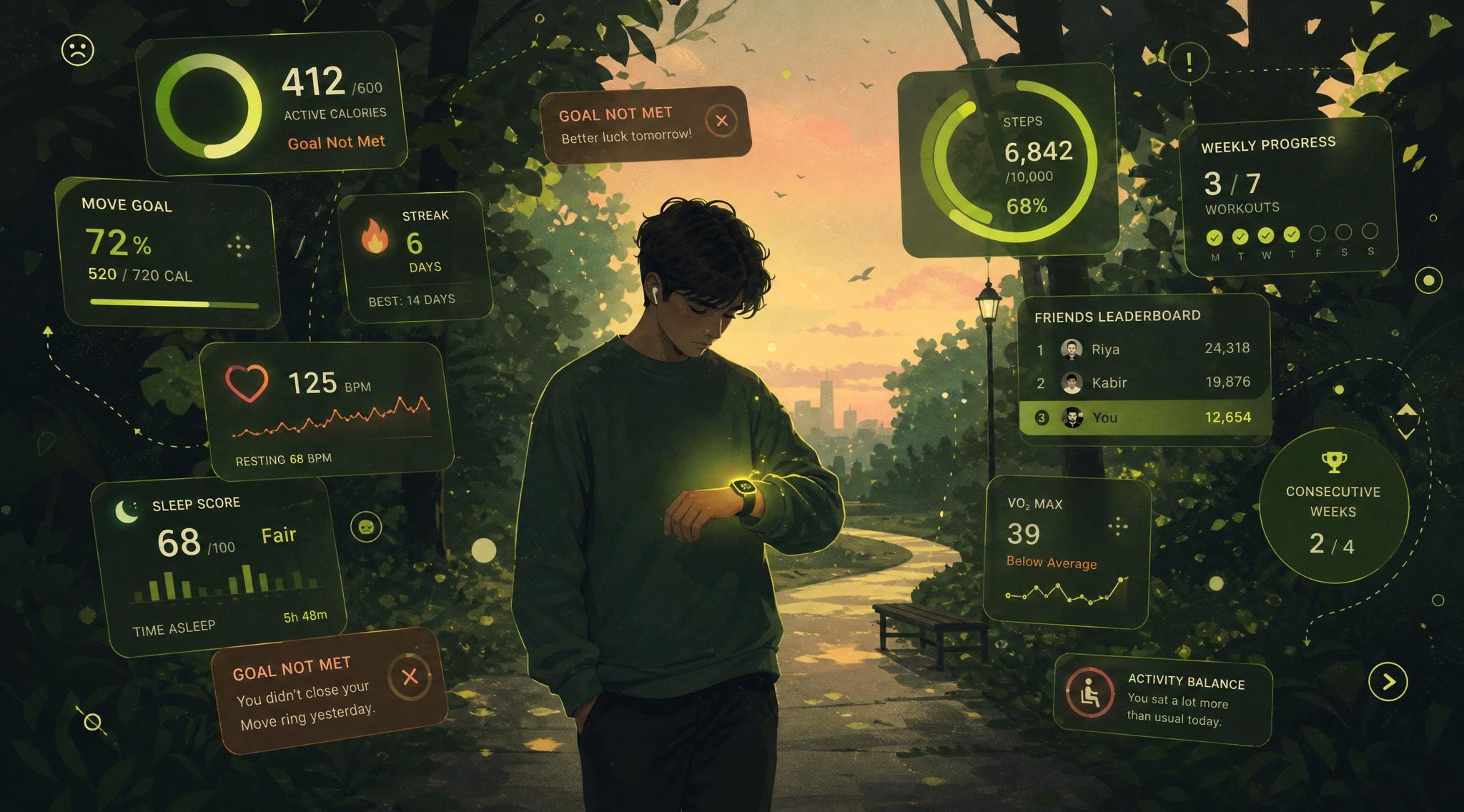
Behaviour Change Techniques (BCTs): The research concluded that while features like goal-setting and feedback are meant to build healthy habits, what also happens is, when you don’t meet a goal, then there are -ve consequences. For example, your app’s negative feedback - be it notifications about failure or poor performance reports - can trigger feelings of guilt, pressure, anxiety, disappointment, and even shame.
“Fitspiration” Information: Most apps promote an idealised, often unrealistic, “thin-and-muscular” body type through images and encouraging messages. This constant exposure can make you compare yourself to an impossible standard, creating a psychological burden and anxiety (especially when you perceive a gap between your own body and the “ideal”).
Gamified and Social Design: Leaderboards, rewards, and online communities are designed to make fitness fun and competitive. But if for any reason, you consistently underperform compared to peers (do you?), these features can cause stress, frustration, and anxiety. Negative comments from others can also fuel these emotions.
Organism - our reaction to the stimulus
Negative Emotions: The research concluded that users exposed to any of the negative stimulus listed above, frequently report feeling guilt, pressure, stress, and frustration. Constant tracking can easily diminish the enjoyment that should otherwise come from being active!
Maladaptive Thoughts: Beyond emotions, your thought patterns can become unhealthy too.
Body Image Concerns: Constant self-monitoring and exposure to “ideal” bodies can worsen body dissatisfaction.
Rumination: You can get stuck in a repetitive loop of negative thoughts about unmet goals or poor performance, which is harmful to well-being.
Obsession with the “Quantified Self”: Some of you may develop an unhealthy obsession with data, allowing numbers to replace your own body’s internal signals and intuition. Happened, already?
Response - what you could end up doing as a result
Disordered Eating: To cope with the guilt or body dissatisfaction triggered by an app, you might engage in extreme dieting, purging, or binge eating. The promotion of ideal body images can make users obsessed with weight loss, increasing the risk of developing serious eating disorders like anorexia nervosa.
Compulsive Exercise: To avoid the negative feelings of failing to meet a goal or losing in a social competition, you could also engage in extreme or compulsive exercise.
Social Isolation: The obsession with tracking calories or exercise can consume time and energy, damaging relationships with family and friends. Some of you may even avoid social events where you feel your diet would be compromised.
Alright, let me not scare you anymore. I read a research. I thought of sharing the findings. There is nothing more here. And of course I understand that not everyone who uses these devices / apps will experience these negative outcomes. Even the researchers have noted that a lot depends on things like - personality, age, motivation to use the app etc. If you are doing good, well, good for you!
Nevertheless, I this research definitely highlights something important: while health and fitness trackers can be valuable tools, they are NOT universally benign.
So I just hope that this blog helped you at least consider the potential “dark side” of tracking everything that you do. Use them more mindfully, if you can - tracking progress is OK, but what you don’t want is for it to start controlling your life.
Now go take a walk. With or without the tracker! :P