

May be if you live in the US, you are aware of this thing. But I learnt about it just now. I did a Google Trend search right away.
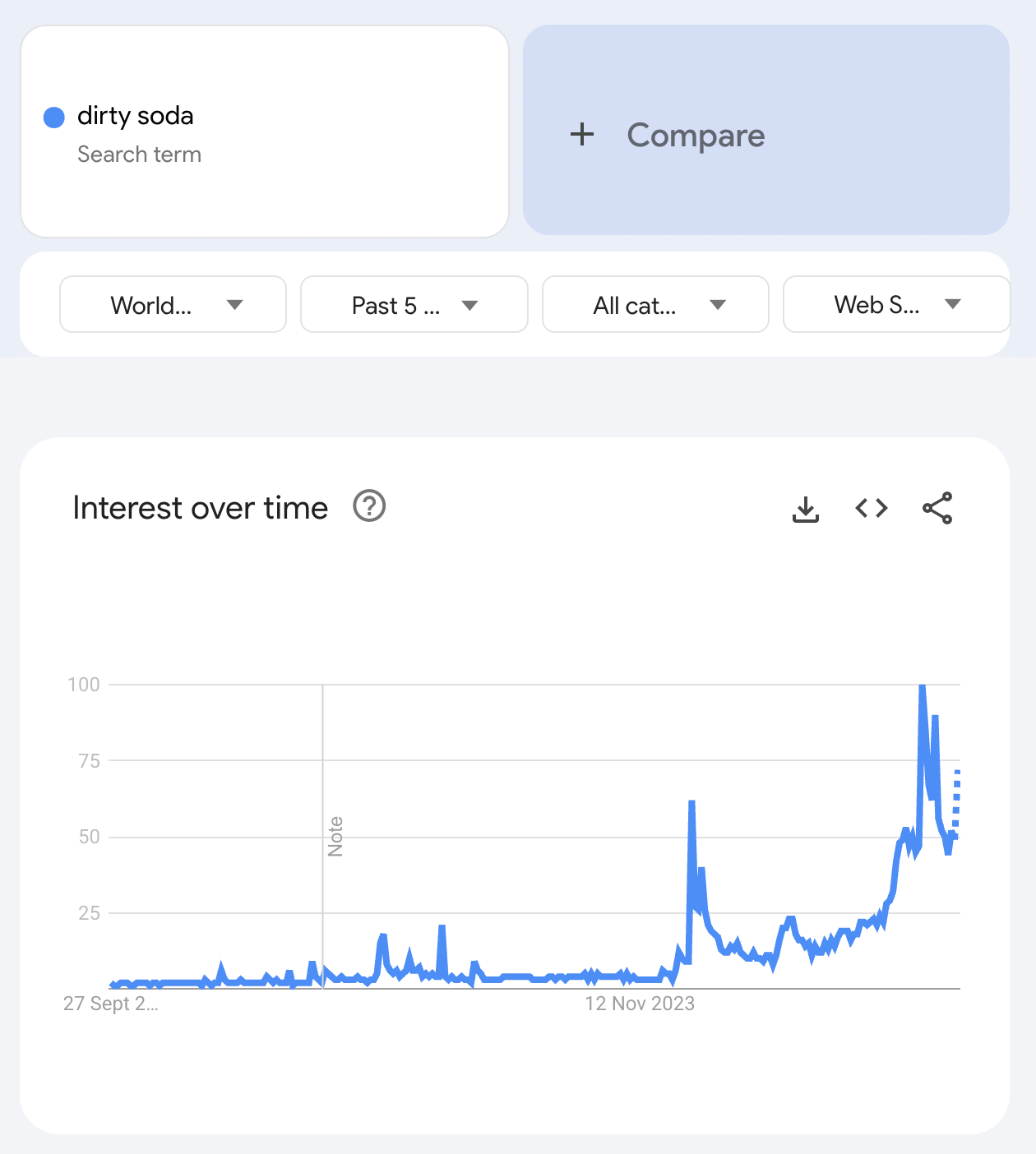
Interesting - so this thing had trended around 2 years ago and then hit a new peak recently. Hmm.
Dirty soda is basically when a restaurant / cafe - combines soft drinks with coffee creamers and flavored syrups, creating customized options for consumers.
The same article that I’ve linked above says that the recent peak (for dirty soda demand) was partly thanks to a particular show.
The trend took off recently due to the reality TV show “The Secret Lives of Mormon Wives” and fast-growing Utah-based beverage chain Swig featuring the drinks. The rise comes as more consumers look for alcohol alternatives that still offer unique experiences.
But here’s the most interesting ‘recent development’ around this trend…
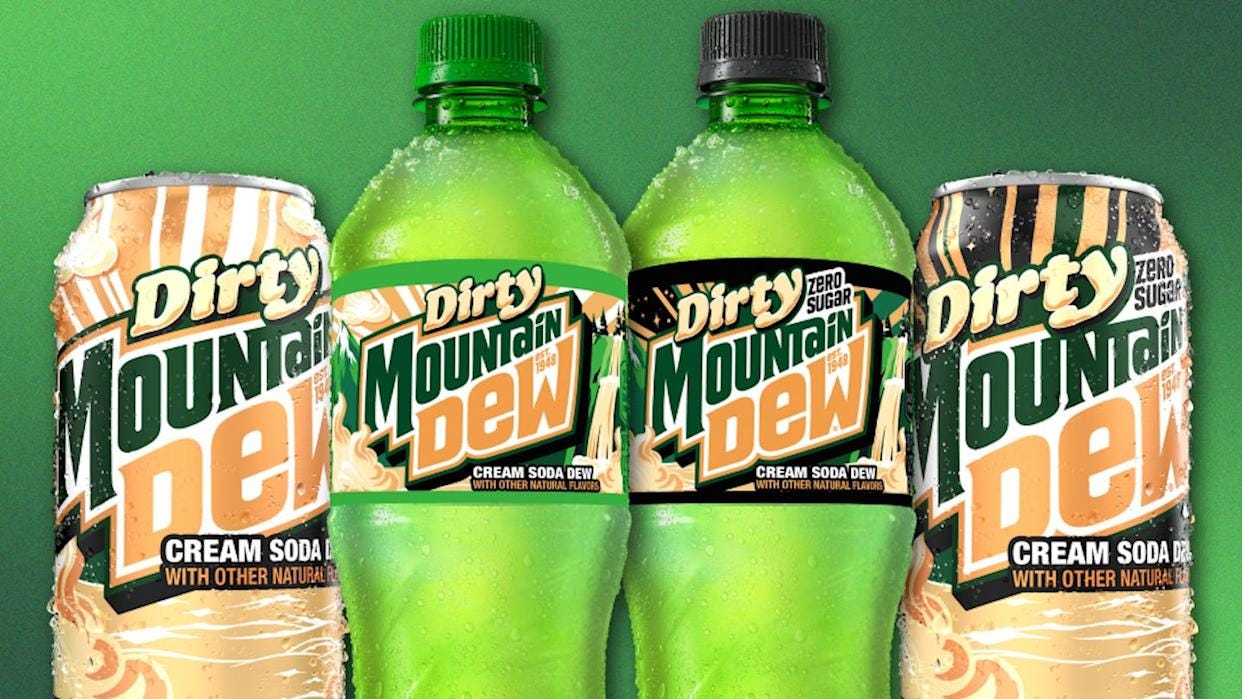
For the first time, an actual soda brand (Mountain Dew) has decided to directly launch a ‘dirty’ version!
(source: same as the link earlier)
This reminds me of a blog post from last year where I had mentioned how…
It took Coca-Cola nearly a century (96 years, to be precise) to introduce its first product extension, Diet Coke.
It’s an interesting blog if you want to check it out where I share the concept of product line augmentation by ‘addition’ vs ‘multiplication’. Though, I will be honest - I cannot conclude where to place this dirty soda launch by Mountain Dew in that framework. If you can guess, let me know?
Since I am a storyteller and a marketer, I can’t resist the urge to guess whether this negative association strategy will work for Mountain Dew or not. Liquid Death made it work. But many others didn’t.
Here’s what I think.
There definitely are some reasons why it could work (at least in the short-term)
Memory/attention: There’s decent amount of research (like this) that has concluded that negative/taboo words (“dirty”) are usually more memorable than bland descriptors (“cream soda”).
Cultural timing: Gen Z and young millennials love ironic, playful, “gross but fun” branding (like Liquid Death). “Dirty” has that ironic edge without being truly offensive.
Category fit (sort of): Soda is already associated with indulgence, sugar, “not healthy.” “Dirty” is almost an authentic acknowledgment of that, which can feel refreshing.
Mainstreaming a niche trend: Since Dirty soda shops are already doing fine, may be there is not much risk here?
But, there also are many other reasons why the negative association strategy might not work out for Mountain Dew
Cultural mismatch: Dirty soda’s quirky Utah origin may not scale globally. In cultures where “dirty” is taken literally (unclean, contaminated), it could turn consumers off.
Over-extension: Unlike Liquid Death, which built its whole brand DNA around “death,” Mountain Dew is simply borrowing “dirty” for a sub-line. If it feels like a gimmick, it could fade quickly.
Parent-brand baggage: Mountain Dew already suffers from associations with extreme sugar and “junk” culture. “Dirty” may reinforce unhealthy stereotypes rather than subvert them?
Backlash possibility: Parents, schools, or regulators may highlight the “dirty = unhealthy” link in public discourse — amplifying health criticism rather than brand fun.
Anyway, we will see. I am sure it is going to be a small scale experiment. Great if it works. Who cares, if it doesn’t.
I will see you soon, with something else to talk about.